No products in the cart.

Update: The new 2027 CPT codes for ABA services have been officially announced.
Over the past year, we’ve been following the upcoming changes to the CPT codes used for ABA services. In July, the Centers for Medicare & Medicaid Services (CMS) gave us our first sneak peek at six new codes as part of the proposed 2027 Medicare Physician Fee Schedule?but at the time, the codes were subject to change.
The American Medical Association (AMA) officially released the 2027 CPT? code set on September 9, 2026. The updated code set includes six new codes for adaptive behavior services, along with revisions to existing codes. Let’s take a closer look at what’s changing.
IMPORTANT NOTE: The 2027 CPT? code set takes effect January 1, 2027. However, coverage, reimbursement, authorization requirements, and other billing policies are determined by individual payers. Providers should refer to the official CPT? Professional 2027 Codebook for complete code descriptions and reporting guidance and confirm payer-specific policies before billing any new or revised codes.

The 2027 code set introduces six new CPT codes for adaptive behavior services:
| CPT Code | Service |
| 97148 | Behavior identification-supporting assessment of harmful behavior involving two technicians |
| +97149 | Each additional technician for the harmful behavior assessment reported under 97148 |
| 97180 | Adaptive behavior non-face-to-face services (e.g., review and analysis of data) personally performed by a physician or other qualified healthcare professional |
| 97159 | Adaptive behavior treatment of harmful behavior involving two technicians |
| +97160 | Each additional technician for harmful behavior treatment reported under 97159 |
| 97173 | Adaptive behavior treatment with analysis administered face-to-face by a physician or other qualified healthcare professional |
You may notice the term ?with analysis? appearing throughout the new and revised code set. In this context, analysis refers to QHP-level clinical decision-making during assessment or treatment. More specifically, it involves the QHP evaluating the patient’s response to assessment or treatment and determining whether treatment targets or protocols need to be adjusted.
This is an important distinction from services delivered ?by protocol,? which involve implementing established treatment procedures as written. In other words, treatment by protocol focuses on carrying out the existing treatment plan, while treatment with analysis involves the QHP analyzing and determining whether changes are needed.

Strong documentation will remain essential as billing requirements evolve.
Brellium uses AI to audit 100% of clinical notes instantly, helping ABA organizations identify documentation issues before they become bigger problems.
Code 97148 covers a behavior identification-supporting assessment of harmful behavior conducted face-to-face with the client. The service is billed when two technicians are required to support the administration of a harmful behavior assessment. This is a technician-level code. However, it’s important to note that a QHP is required to be on site during the delivery of the harmful behavior assessment.
When more than two technicians are required, +97149 is an add-on code to bill the time of additional technicians.
Harmful behavior is defined as behavior that jeopardizes the patient’s health or safety or poses a risk of harm or medical consequences. Examples of harmful behavior can include SIB, aggression, property destruction, pica, elopement, feeding difficulties, sleep difficulties, rumination, bruxism, mouthing objects, inadequate fluid intake, skin picking, resistance to or lack of cooperation with medical or dental procedures, or other behaviors that may necessitate medical treatment.
Perhaps one of the most notable changes for ABA professionals is CPT code 97180. This code recognizes certain clinical work performed outside of face-to-face treatment. In other words, non-client-facing treatment planning!
Activities must include one or more of the following:
The code is reported in 15-minute units and must be personally performed by a physician or other qualified healthcare professional. This code can only be billed once per week, but the service can be rendered multiple times during the week. When billing 97180, the QHP will add the cumulative total of time spent rendering this service over the last seven days. For example, if they do 15 minutes of 97180-allowable activities Monday-Friday, that time adds up to 1.25 hours, or 5 units, which would be billed together.
Non-billable treatment planning is a major pain point in ABA, so the addition of a dedicated CPT code for these activities could be significant for providers.
These two new codes are used to report direct treatment of harmful behavior when two or more technicians are required to treat harmful behavior. 97159 applies to adaptive behavior treatment of harmful behavior involving two technicians, provided face-to-face with the patient in an environment customized to the patient’s behavior. When more than two technicians are reported, bill +97160 as the add-on code for each additional technician after the first two. The maximum number of technicians that can be reported is five. The first two technicians would bill 97159, and the remaining three would bill +97160.
The new 97173 code covers adaptive behavior treatment with analysis administered face-to-face with one patient by a physician or other qualified healthcare professional.
This creates a distinct code for treatment with analysis delivered by the BCBA or other QHP. In other words, this code is reported when the BCBA works a direct session with a client and performs analysis. For example, they run programs while analyzing the learner’s responses and identifying whether to make modifications to programming.
This is particularly noteworthy when considered alongside changes to 97155. The new code creates a distinct way to report treatment with analysis delivered directly by the QHP, rather than treatment implemented by a technician while the QHP provides direction and analysis.
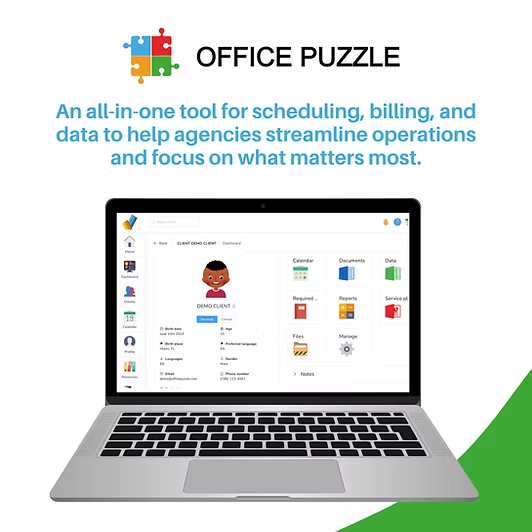
Learn more about Office Puzzle’s unified ABA platform
The familiar adaptive behavior codes 97151?97158 remain part of the 2027 code set, but several descriptors have been revised.
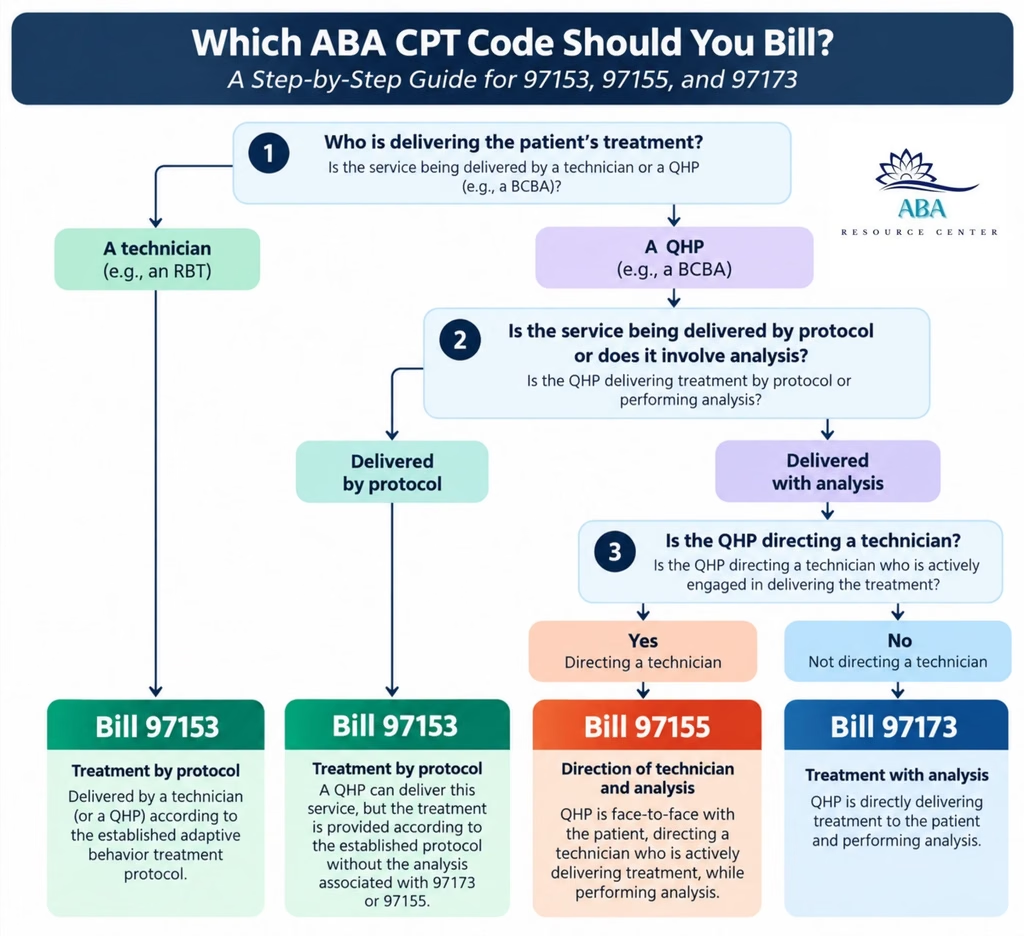
One of the most significant changes involves 97155. Previously, 97155 was described as adaptive behavior treatment with protocol modification administered by the QHP, which could include simultaneous direction of a technician.
Beginning in 2027, 97155 is described as “adaptive behavior direction of technician and analysis” by a physician or other QHP. This means that to bill 97155, the QHP must both direct the technician and conduct analysis. If the QHP runs a direct session with analysis, but no technician is present, they would report the new 97173 code, which describes adaptive behavior treatment with analysis administered by the QHP.
When reporting 97155 and 97173, ?analysis? requires the QHP to evaluate the patient’s response and determine whether changes are needed. However, keep in mind that they don’t need to actually modify the treatment protocol. The analysis may result in a determination that no changes are necessary.
| Code | Who is delivering the service? | What’s happening? |
| 97153 | Technician | Technician delivers adaptive behavior treatment by protocol |
| 97155 | QHP (e.g., BCBA) while technician is present | QHP provides direction of the technician and analysis |
| 97173 | QHP (e.g., BCBA) | QHP directly delivers adaptive behavior treatment with analysis |
97156 has also been revised and now describes family adaptive behavior treatment guidance with analysis. The descriptor includes discussing protocols and treatment targets and/or training caregivers to implement assessment or treatment protocols.
BCBA? Fieldwork Supervision Curriculum E-Book
$50.00
Explore the Curriculum
The revised code set removes the temporary Category III adaptive behavior “T” codes, including codes such as 0373T. Once these codes are deleted from the CPT? code set, in January, they can no longer be reported for dates of service on or after January 1, 2027. Providers currently billing T-codes should reach out to payers for guidance on how to transition to the applicable 2027 CPT codes.
The new and revised ABA CPT codes will go into effect January 1, 2027.
The ABA Coding Coalition will be providing webinars through September 2026 to support providers in understanding these changes.
While it’s not called “treatment planning,” there is a new code that covers some treatment planning activities outside of direct sessions. 97180 is the new dedicated CPT code for non-face-to-face services, such as reviewing documentation and making clinical decisions.
97155 = QHP directs technician + analyzes treatment
97173 = QHP directly delivers treatment + analyzes treatment
Under the revised 2027 descriptor, 97155 is specifically for direction of a technician and analysis by the QHP, making technician involvement part of the service described by the code.
When the QHP is instead providing treatment with analysis directly to the patient, they would bill the new code 97173.
97153 is adaptive behavior treatment by protocol administered by a technician.
97173 is adaptive behavior treatment with analysis administered by a physician or other qualified healthcare professional.
No. The existence of a CPT code does not guarantee coverage or reimbursement. Always verify with individual payers.
CPT establishes the standardized code set, but it does not require an individual payer to cover a particular service, establish a specific reimbursement rate, or authorize a particular number of units. Those decisions remain payer-specific.
Under HIPAA, payers that accept electronic claims submissions must utilize the new Category I CPT codes. However, there’s an important caveat. Payers can have their own procedures and timelines for implementing the new codes. We encourage all providers to reach out to individual payers for guidance on moving forward.
Now that the AMA has officially released the codes, ABA organizations can begin better preparing for the January 1, 2027 effective date. Organizations should familiarize clinical and billing teams with the new codes and revised descriptors, determine which services may be impacted, and begin reviewing their documentation and billing workflows.
However, don’t make assumptions about coverage based solely on the availability of a CPT code. Payer-specific coverage, authorization, billing requirements, provider qualifications, and reimbursement policies will remain important considerations. Verify requirements with individual funders before implementing billing changes.
Questions to Ask Your Payers Before January 1
The ABA Coding Coalition is hosting the following webinars for providers, billers, regulators, and vendors.
Want to stay in the loop as the 2027 ABA CPT code changes roll out? ABA Resource Center is committed to keeping the ABA community up-to-date with the latest information and guidance. Subscribe to our email list so you don’t miss future updates.
We value accuracy. ABA Resource Center is committed to providing reliable, up-to-date information for the ABA community. If you notice something that may need clarification or correction, please reach out?we?re always happy to review and update our content as needed.
Information in this article was developed using guidance from the ABA Coding Coalition, including its website, 2027 CPT? coding resources, and the 9/21/2026 ABAI-sponsored webinar on the 2027 adaptive behavior CPT code changes.
For the latest coding resources and guidance, visit the ABA Coding Coalition at abacodes.org.
Disclaimer: ABA Resource Center is not affiliated with ABA Coding Coalition. This article is for informational purposes only and should not be considered billing, coding, legal, or reimbursement advice. Providers should consult the official 2027 CPT? code set and applicable payer guidance when determining how to report services.
Partnership & Transparency Disclaimer
The content we share on ABA Resource Center is reader-supported. This means that if you click on certain links and make a purchase, we may earn a small referral fee. Rest assured, we only recommend tools, resources, and services that we genuinely believe add value to the ABA field. See more of our partners here.